NFPA 70
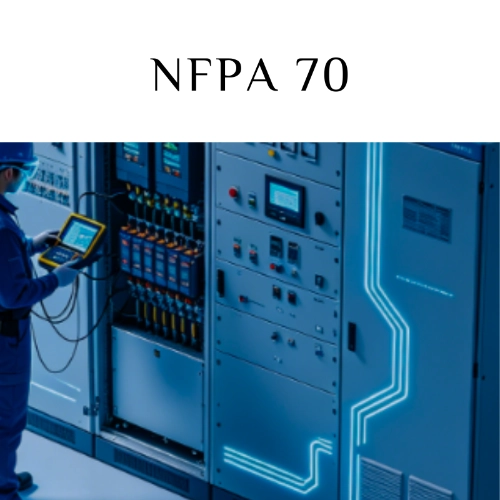
NFPA 70, full name National Electrical Code (NEC), is the cornerstone mandatory standard for electrical safety in North America published by the National Fire Protection Association (NFPA); latest edition: NFPA 70-2026, updated every three years. Core Purpose: To unify the design, installation, inspection, and maintenance of electrical systems, covering low voltage (≤600V) to medium/high voltage, mitigating electric shock, fire, and arc flash hazards. It is legally enforced across all 50 U.S. states and Canada, serving as the sole compliance benchmark for electrical construction, equipment access, and regulatory inspections, protecting life and property.
Main coverage risks and testing items:
1. Insulation & dielectric test
2. Grounding & bonding test
3. Temperature rise test
4. Overcurrent/short-circuit protection review
5. Clearance & creepage distance
6. Leakage current test
7. Flame retardancy & material test
8. Mechanical & environmental test
9. Marking & documentation review
Project Details
Typical applicable products (high-frequency scenarios)
Covers all grid- connected electrical equipment and installations, primarily rated ≤600V, extending to medium-voltage systems such as PV/energy storage.
- Building electrical: Residential/commercial distribution systems, lighting, receptacles, panels, emergency power, fire alarm wiring.
- Industrial equipment: Motor control centers (MCCs), PLC cabinets, VFDs, industrial robots, machine tools, production line electrical systems.
- New energy equipment: PV inverters, energy storage systems (ESS), EV chargers, wind turbine control units, micro grid devices.
- Commercial electrical: HVAC, kitchen equipment, medical devices, data center UPS, server cabinet power, temporary power for stages/exhibitions.
- Hazardous/special locations: Explosion-proof electrical for chemical/oil-gas, mining equipment, marine electrical, outdoor distribution, wet/corrosive environment devices.
- North America market access: Low-voltage electrical products, control cabinets, and assemblies exported to the U.S./Canada must comply with NEC and obtain UL/CSA/NRTL certification.
Main coverage risks and testing items details:
- Insulation & dielectric test: Insulation resistance ≥1MΩ, dielectric withstand (AC high voltage) to verify breakdown resistance.
- Grounding & bonding test: Ground resistance ≤25Ω, bonding continuity ≤0.1Ω for exposed conductive parts, ensuring fast fault current discharge.
- Temperature rise test: Compliance for terminals/windings/enclosure under rated load; no overheating/discoloration/odor.
- Overcurrent/short-circuit protection review: Compliance of breaker/fuse selection, breaking capacity, and trip values to prevent overload/short circuit.
- Clearance & creepage distance: Compliance between live parts and ground to prevent leakage/breakdown.
- Leakage current test: ≤0.5mA under normal/fault conditions to prevent micro-shock.
- Flame retardancy & material test: Plastic parts meet UL 94 V-0/V-1; 750℃ glow-wire test compliance.
- Mechanical & environmental test: IP rating, vibration/shock, terminal tightness, corrosion resistance, and aging verification.
- Marking & documentation review: Compliance of nameplates, NEC/UL marks, warnings, wiring diagrams, and manuals。